
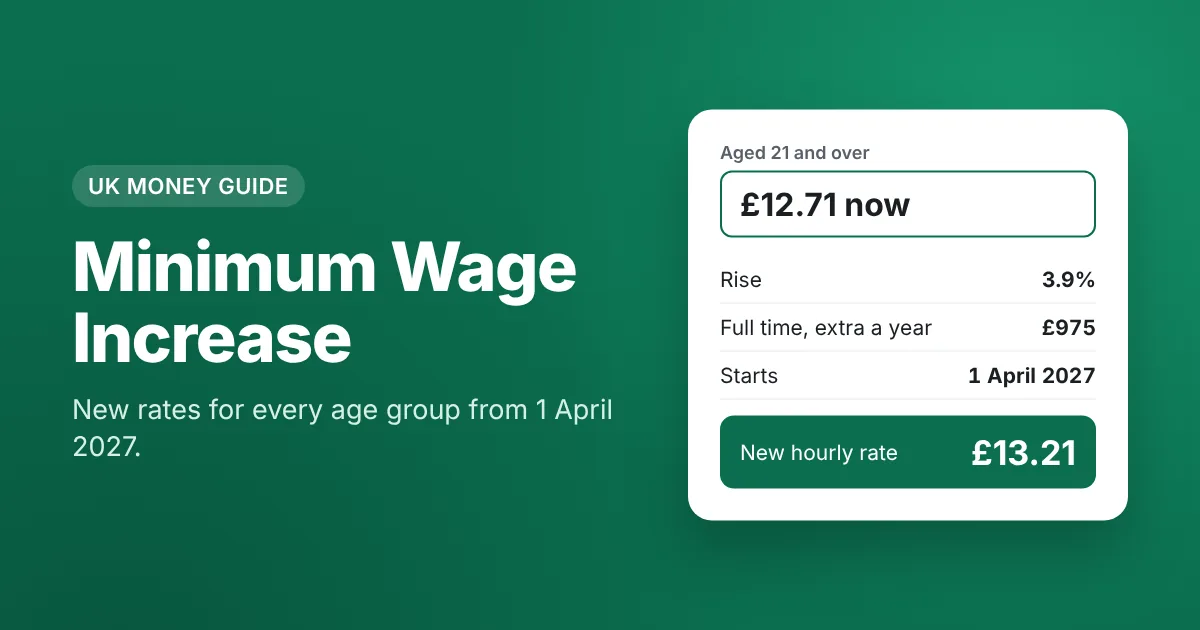
The next national minimum wage increase takes effect on 1 April 2027, when the National Living Wage for workers aged 21 and over rises from £12.71 to £13.21 an hour. The government confirmed the new rates in October 2026, following recommendations from the Low Pay Commission. Here is what changes for each age group.
At a glance
- Date: 1 April 2027.
- 21 and over: £12.71 rises to £13.21 an hour (+3.9%).
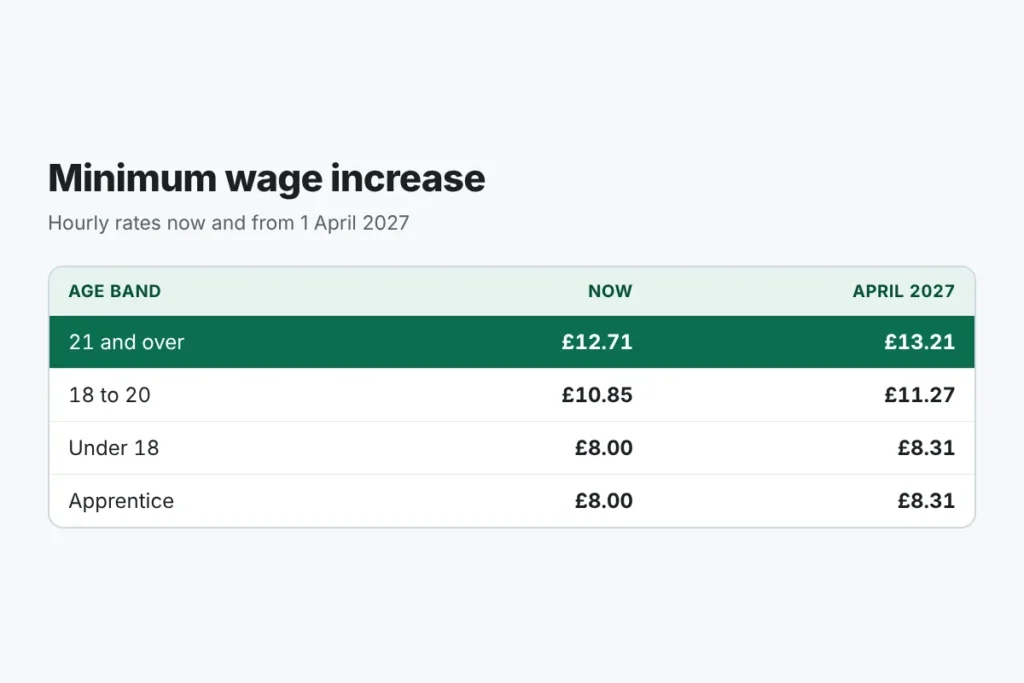
- 18 to 20: £10.85 rises to £11.27. Under 18 and apprentices: £8.00 rises to £8.31.
- Full time (37.5 hours): about £975 more a year before tax.
Minimum wage increase: old and new rates
| Age band | Now (from April 2026) | From 1 April 2027 | Rise |
|---|---|---|---|
| 21 and over | £12.71 | £13.21 | 3.9% |
| 18 to 20 | £10.85 | £11.27 | 3.9% |
| Under 18 | £8.00 | £8.31 | 3.9% |
| Apprentice | £8.00 | £8.31 | 3.9% |
What the national minimum wage increase means for your pay
| Hours a week (21+) | Weekly pay now | Weekly pay from April 2027 | Extra a year |
|---|---|---|---|
| 16 hours | £203.36 | £211.36 | £416.00 |
| 25 hours | £317.75 | £330.25 | £650.00 |
| 37.5 hours | £476.63 | £495.38 | £975.00 |
| 40 hours | £508.40 | £528.40 | £1,040.00 |
A full-time worker on 37.5 hours gets about £975 more a year before tax. After tax and NI, a basic rate taxpayer keeps about 72% of that. Use the minimum wage salary calculator to see your own weekly, monthly and yearly figures.
Why does the minimum wage go up every April?
The Low Pay Commission recommends new rates each autumn, and the government announces them before the Budget. The aim is to keep the National Living Wage at two-thirds of median hourly earnings, while checking the effect on jobs. Younger workers’ rates are being brought closer to the adult rate over time, with plans to remove the separate 18 to 20 rate in future.
Each national minimum wage increase is confirmed in law by regulations laid before Parliament early in the year, so the rates above are final.
How the minimum wage has grown
| From April | Rate for 21 and over |
|---|---|
| 2023 | £10.42 |
| 2024 | £11.44 |
| 2025 | £12.21 |
| 2026 | £12.71 |
| 2027 | £13.21 |
What employers need to do
- Update payroll so pay periods starting on or after 1 April 2027 use the new rates.
- Check salaried staff: divide yearly pay by hours worked to make sure it is still above the minimum.
- Watch salary sacrifice and deductions for uniforms or equipment, which can take pay below the minimum.
- Remember workers who have a birthday that moves them into a higher band.
Employer National Insurance also rises with pay. See our minimum wage guide for the full rules, or rates by age.
The real Living Wage
The real Living Wage is a voluntary rate set by the Living Wage Foundation, based on the cost of living. From the 2026 announcement it is £14.10 an hour across the UK and £15.45 in London, paid by accredited employers. It is not a legal minimum.
Frequently asked questions
When is the next minimum wage increase?
1 April 2027. The new rates apply from the start of the first pay period that begins on or after that date.
How much is the minimum wage increase?
The National Living Wage rises by 3.9%, or £0.50 an hour.
Does the increase apply to apprentices?
Yes. The apprentice rate rises to £8.31 an hour.
Is the rise the same in Scotland, Wales and Northern Ireland?
Yes. The national minimum wage is the same across the whole UK.